Hi everyone,
I wanted to share a short piece with you about what great classrooms look like in action.
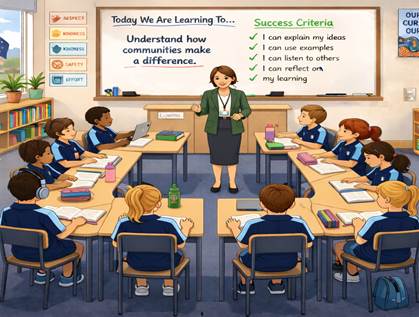
When you walk into a great classroom, the learning is obvious. You do not need a long explanation from the teacher. You can see it in the way students are working, and you can hear it in the way they talk about their learning.
Learning That Is Visible
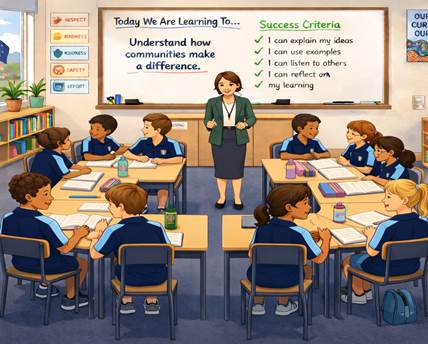
Students are not just completing tasks. They understand what they are learning and why it matters. They can explain it in their own words, and they can connect it to what they have learned before. That level of understanding is what drives real progress.
Ask a student what they are learning, and they can tell you. Ask them how they know they are doing well, and they can explain it.
That clarity comes from strong teaching where learning intentions and success criteria are not just displayed, but used throughout the lesson.
Students refer to them during their work. They use them to check their progress. They discuss them with their peers and use them to improve. Over time, this builds independence and confidence, because students know what success looks like and how to get there.
The Role of the Teacher
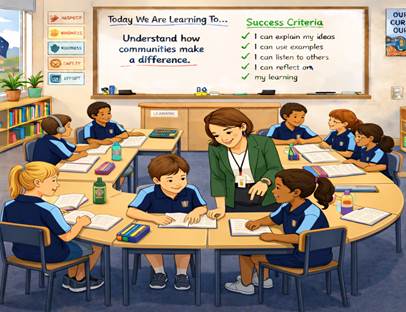
None of this works without the teacher.
In a great classroom, the teacher is constantly guiding the learning. They model what success looks like, ask questions that stretch thinking, check for understanding, and provide feedback in the moment.
Students are active, but the teacher is always leading the learning with purpose. Every activity, every question, and every interaction is intentional and focused on improving student outcomes.
A great classroom is not defined by how quiet it is. It is defined by how clearly students understand their learning, how confidently they talk about it, and how actively they are involved in it.
When students are engaged, supported, and challenged, you see it immediately.
That is what makes the difference.
A Simple Way Parents Can Support Learning
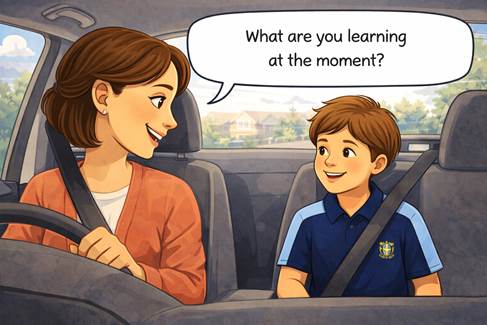
For parents, this is what to look for when talking with your child about their day at school.
Rather than asking, “What did you do today?”, try asking:
• What are you learning at the moment?
• How do you know you are doing well?
These questions help children think more deeply about their learning and give you a clearer picture of their progress.
Working Together for Every Child

At our school, this is the standard we are working towards every day.
We want every student to be able to talk clearly about their learning, understand what success looks like, and feel confident in how to improve. When home and school are asking the same questions and focusing on the same things, the impact on student learning is even stronger.
Together, we can help every child not just complete work, but truly understand and succeed.
Michael Patane.
 The Primary Principal - Michael Patane
Leave a comment