For many families, school drop-off can be one of the hardest moments of the day. Tears at the gate, clinging at the classroom door, and that look your child gives you as you walk away can stay with you long after you’ve left. If you’ve experienced this, you are certainly not alone, and importantly, it is completely normal.
Understanding What’s Happening
For younger children especially, feeling anxious at drop-off is a common part of development. Research in early childhood psychology shows that separation anxiety is a typical emotional response when children are transitioning into new environments like school. These reactions often reflect something positive rather than concerning. They indicate that your child has formed a strong attachment to you and is still learning how to manage time apart.
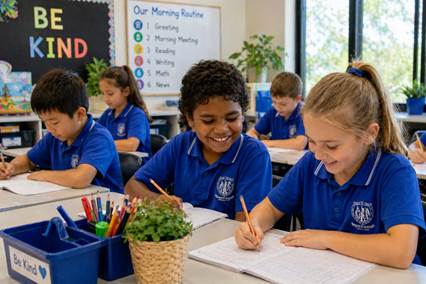
Reassuringly, studies and school experience consistently show that many children who appear very upset at drop-off settle quickly once they become engaged in play, routines, and learning activities. What can feel like a long and difficult goodbye for a parent is often followed by a calm and productive start to the day for the child.
The Power of “Drop and Go”
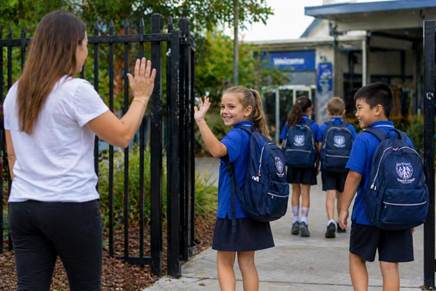
As difficult as it can feel in the moment, one of the most effective approaches to reducing drop-off anxiety is maintaining a calm, consistent goodbye and then leaving. This approach, often referred to as “drop and go,” is supported by both research and practical experience in schools.
Consistent routines help children feel safe because they know what to expect. Lingering or returning for “just one more hug” can unintentionally increase anxiety, as it creates uncertainty about whether the separation is actually happening. A clear and predictable goodbye, followed by a confident departure, helps children begin to regulate their emotions more effectively.
Importantly, this approach is not about withdrawing support. It is about sending a strong and reassuring message: “You are safe, you are capable, and you can do this.” Over time, this builds resilience, confidence, and independence, which are essential skills for both school and life.
What Helps Your Child at Drop-Off
There are several simple and effective strategies that can make a significant difference in how your child experiences drop-off.
Keep the goodbye short and predictable. Establishing a consistent routine, such as a hug, a positive statement, and then leaving, helps build trust and security over time.
Stay calm, even if you don’t feel it. Children are highly attuned to adult emotions. When parents present as calm and confident, children are more likely to mirror that sense of stability.
Talk positively about the day ahead. Before arriving at school, remind your child of the people they will see and the activities they enjoy. This helps shift their focus from separation to opportunity.
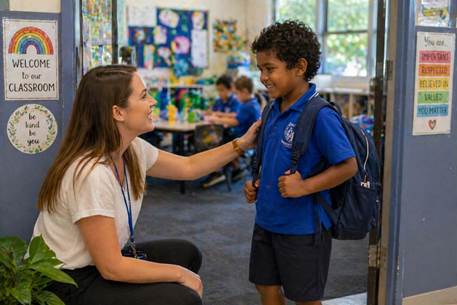
Trust the process and the school. Teachers and staff are experienced in supporting children through these transitions. In many cases, children settle within minutes and engage successfully in the learning environment.
A Shift in Perspective for Parents
It is completely natural to want to stay, comfort, and protect your child during moments of distress. However, part of raising children is gradually helping them learn to function independently. School plays a critical role in this process, providing opportunities for children to build confidence, manage emotions, and develop social connections.
Independence is not created by constant proximity. It is developed through safe and supported separation. When children experience consistent, calm goodbyes, they begin to understand that separation is temporary and manageable.
Final Thought
If your child is finding drop-off difficult, it does not mean something is wrong. It means they are learning to navigate an important developmental step. Like all learning, it can feel uncomfortable before it becomes easier.
By staying consistent, calm, and confident, you are helping your child build the skills they need to succeed both at school and beyond. In time, those difficult goodbyes are often replaced with a quick wave and a confident start to the day.
And as always school staff are there to help support you through this process so reach out if you feel the need to do so.
Michael Patane
 The Primary Principal - Michael Patane
Leave a comment